
Italiano
- English
- Español
- Português
- русский
- Français
- 日本語
- Deutsch
- tiếng Việt
- Italiano
- Nederlands
- ภาษาไทย
- Polski
- 한국어
- Svenska
- magyar
- Malay
- বাংলা ভাষার
- Dansk
- Suomi
- हिन्दी
- Pilipino
- Türkçe
- Gaeilge
- العربية
- Indonesia
- Norsk
- تمل
- český
- ελληνικά
- український
- Javanese
- فارسی
- தமிழ்
- తెలుగు
- नेपाली
- Burmese
- български
- ລາວ
- Latine
- Қазақша
- Euskal
- Azərbaycan
- Slovenský jazyk
- Македонски
- Lietuvos
- Eesti Keel
- Română
- Slovenski
- मराठी
- Srpski језик

Novità del settore
Siamo lieti di condividere con voi notizie rilevanti del settore, nonché alcuni sviluppi del settore, conoscenze del settore e altro ancora.
 10 2026-07
 Tasso di desalinizzazione della membrana RO: guida completa al calcolo, agli standard e alla risoluzione dei problemi
The RO membrane desalination rate is the most critical indicator of reverse osmosis system performance. It measures the membrane‘s ability to remove dissolved salts, heavy metals, and ionic impurities – expressed as a percentage. Understanding what affects this rate and how to maintain it is essential for any commercial or industrial water treatment project.
In this guide, I will walk you through the calculation formulas, industry standards, 10 key influencing factors, troubleshooting methods, and daily maintenance tips to keep your RO system running at peak desalination performance.
 08 2026-07
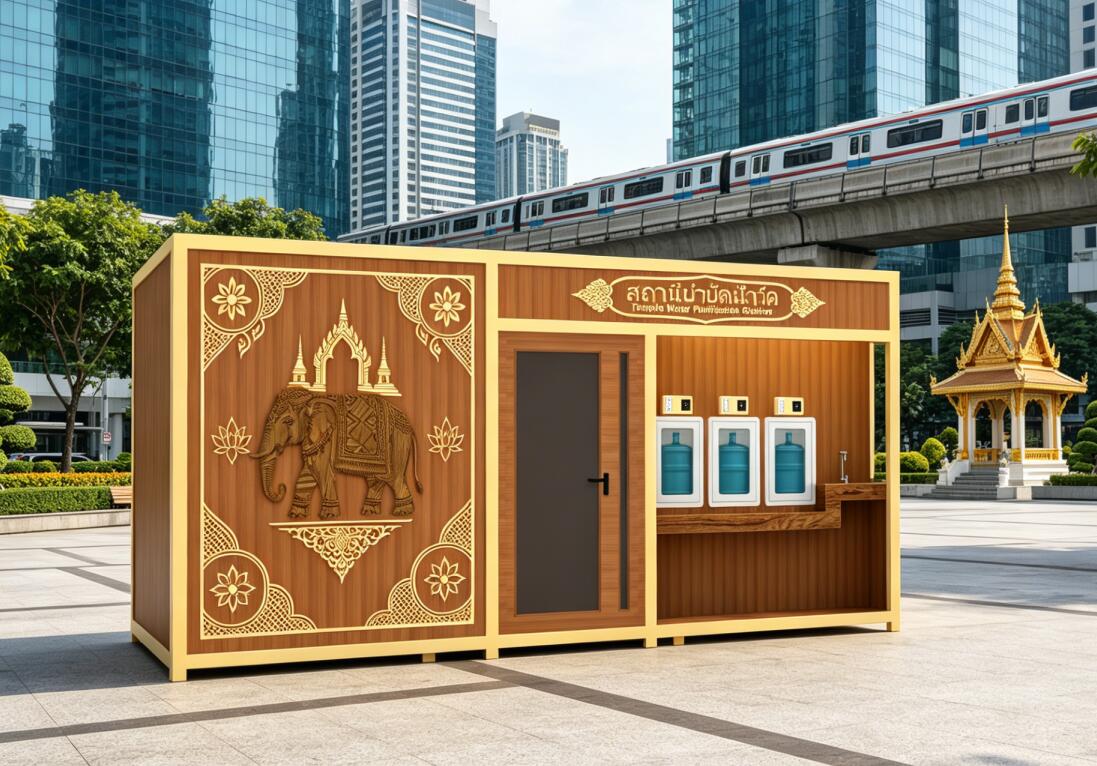
 Stazione dell'acqua del tempio tailandese: design con elefante e pagoda intagliati a mano?
Thailand‘s thousands of Buddhist temples welcome millions of pilgrims and tourists every year. But most temples rely on temporary or outdated water supply – unsafe, unreliable, and visually out of place. Ordinary plain water cabinets clash with the sacred beauty of ancient Thai architecture, breaking the harmony of pagodas, lotus murals, and classical temple grounds.
That is why we designed the Thai temple cultural water purification station – a custom modular water kiosk that combines authentic hand‑carved Thai art with a complete industrial‑grade RO water treatment system. It provides safe drinking water while becoming a photogenic landmark that respects and enhances the temple‘s cultural heritage.
 07 2026-07
 Macchina UV UF a basso costo per acque reflue zero per progetti di trivellazione in Africa?
Water scarcity, unstable borehole pressure, and unsafe raw water quality plague African villages, farms, and remote communities. Traditional RO systems waste precious groundwater and carry high operating costs. Our low cost zero wastewater UF UV machine is engineered for smallscale borehole projects, combining constant pressure storage, ultrafiltration purification, and UV disinfection in one compact, budgetfriendly unit.
 06 2026-07
 Soluzione per le acque sotterranee di una villa africana – Addolcitore + UF + Sistema UV?
If you own a villa in Africa, you know the reality: groundwater is your only reliable source – but it comes with serious problems. High hardness destroys water heaters and clogs pipes. Sediment makes water cloudy. Bacteria threaten your family‘s health. And in water‑scarce regions, wasting water is not an option.
A single filter cannot solve all these issues. That is why I recommend the softener + UF + UV integrated system – a three‑stage whole‑house solution designed specifically for African villa groundwater.
 03 2026-07
 La tecnologia di purificazione delle acque a scarto zero è affidabile? Questo dispositivo di ultrafiltrazione + sterilizzazione UV apre una nuova strada per l'acqua potabile sana
Con il rapido sviluppo del settore della depurazione dell'acqua civile, il risparmio idrico, la lunga durata e le prestazioni orientate allo scenario sono diventate le principali tendenze di sviluppo. Sebbene i tradizionali depuratori d’acqua a osmosi inversa RO siano ampiamente adottati per la loro capacità di purificazione avanzata, sono afflitti da elevati rapporti di acque reflue e gravi sprechi di risorse idriche. Questo inconveniente limita notevolmente la loro popolarità nelle aree rurali e remote con scarsità d’acqua. Nel frattempo, i consumatori nutrono da tempo dubbi sulla tecnologia di purificazione dell’acqua a rifiuti zero: il funzionamento a rifiuti zero compromette i risultati di purificazione? La tecnologia è matura e stabile? Può adattarsi all’uso domestico dell’acqua a lungo termine?